
Have you ever felt anxious the more you spend on ads? You open the Meta dashboard and the numbers look fine. ROAS is decent. But something feels off, a nagging thought you can't shake: what happens if I turn the ads off?
That anxiety is justified. There's a trap that almost every Korean DTC brand falls into when expanding globally. They pour the majority of their budget into performance advertising while completely neglecting the most stable, highest-ROI channel available. That channel is email marketing. "Email? Isn't that kind of outdated?" The moment you think that, you're already falling behind.

The Numbers Don't Lie
In 2026, the average ROI for email marketing is $36 for every $1 spent. In the US market, that number climbs to $72. For comparison, paid social ads on Meta or TikTok return an average of just $2 to $5 per dollar.
The math is simple. Dollar for dollar, email generates up to 14 to 36 times more revenue than social advertising. And yet, most brands keep pushing email to the bottom of the to-do list. They launch a Shopify store in the US or Europe, run ads, and wait for the sales to come in. But the moment the ads stop, so does the revenue.
That's the core problem with an ad-dependent structure. The brand isn't growing, the ad spend is doing the growing for it. It's a kind of growth that only holds as long as the platform keeps running. One algorithm change, and it all shakes.
There's a real-world example of this. Before partnering with Disrupt, Amore Mall (Amorepacific's global e-commerce platform) was struggling to acquire new customers in a market already dominated by established online sellers. Ads alone weren't cutting it. When Disrupt built an integrated strategy combining performance advertising with email campaigns, conversion revenue grew 294% in just three months. A closer look at how Amore Mall achieved that result is available in the full case study, and it shows what happens when email and advertising are run as a single system rather than in isolation.

The digital marketing landscape in 2026 looks fundamentally different from two years ago. Three structural shifts are happening simultaneously, and all three point in the same direction: performance advertising alone is no longer enough.
First, ad costs are skyrocketing. Between 2023 and 2025, customer acquisition costs (CAC) for e-commerce brands rose an average of 40 to 60%. It's not just increased competition. Since iOS updates degraded targeting precision, brands are getting fewer results for the same budget. You're paying more to reach fewer people.
Second, third-party cookies are disappearing. As Google, Meta, and every major platform tighten privacy regulations, retargeting based on external data is becoming increasingly impossible. To compete in global markets, Korean brands need data they own, not data they rent from platforms. An email list is the foundation of first-party data. It's the only channel that lets you identify customers, segment them, and deliver personalized messages without relying on cookies.
Third, platform risk has become very real. When TikTok faced a regulatory crisis in the US, brands that had built everything on TikTok nearly lost their primary revenue channel overnight. Has your organic reach ever dropped 90% after a single algorithm update? There is only one channel completely immune to that kind of risk: your email list.
Meta can raise ad prices. TikTok can face regulation. Google can change its algorithm. Your email list remains yours, no matter what. That's why email isn't just a marketing channel, it's a brand asset. The smartest brands already know this, which is why they never let any single platform account for more than 30% of their marketing budget. Ads bring in new customers. Email keeps them, turning one-time buyers into repeat customers. Brands that run both will always outperform brands that run ads alone.

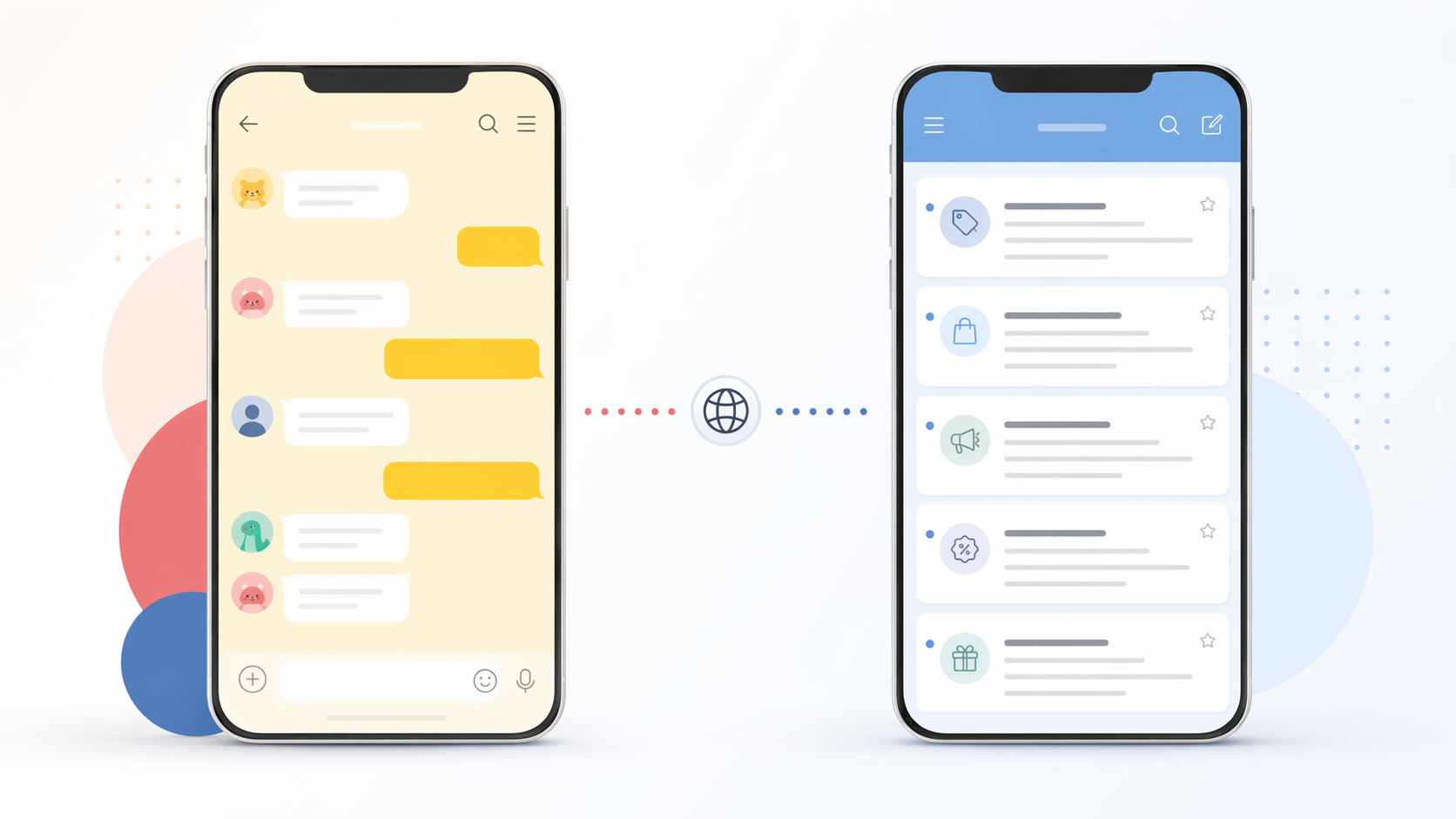
Let's be honest about this. It's not really Korean brands' fault. Brands that have found success in the domestic market are accustomed to KakaoTalk channels, Naver Smart Store notifications, and in-app push messages. Those channels work powerfully in Korea, and of course you're going to use the tools that have worked for you.
The problem emerges the moment you enter an overseas market. Consumers in the US, Europe, and Southeast Asia don't use KakaoTalk. For them, email is the most natural and trusted channel for brand communication. Launching in a foreign market without building Shopify email automation flows is the equivalent of running marketing in Korea without a KakaoTalk channel. You're missing the foundation entirely.
What makes this even more important is that global consumers already have deeply ingrained expectations around email-based brand experiences. Order confirmation emails, shipping updates, personalized product recommendations, repurchase sequences: all of these are part of how international shoppers decide whether a brand is trustworthy. A brand that doesn't deliver on these touchpoints will be perceived as "unfinished" in the global market, no matter how good the product is. And first impressions are twice as hard to change.
K-beauty brand Biodance illustrates this perfectly. Behind their rise from an Amazon launch to the #1 bestseller across the entire global beauty category wasn't just smart advertising, it was a systematic e-commerce structure built on Shopify. Rather than letting ad-driven traffic slip away, they captured it through structured channels and converted it into repeat purchases. That's the difference between a brand that sells well and a brand that actually scales globally. The full Biodance case study breaks down how that structure came together in practice.
How many of these are currently active in your Shopify store?
- Welcome series for new subscribers (minimum 3-email sequence)
- Abandoned cart automation flow
- Post-purchase repurchase sequence
- Win-back campaign for dormant customers
- Purchase history-based segmentation
If fewer than three are checked, revenue is leaking from your store every single day. This isn't an exaggeration. Automated emails account for just 2% of total sends but drive 30% of total email revenue. Once set up, they run 24 hours a day, 365 days a year, and unlike ads, there's no daily budget to burn. When these five flows are running properly, email can account for 20 to 30% of your total Shopify revenue. And that's revenue generated without additional ad spend.
Before we wrap up, let's address one common misconception. If you've read this and thought, "So I should cut ad spend and focus on email instead," that's the wrong conclusion. Email's real power emerges when it works alongside advertising.
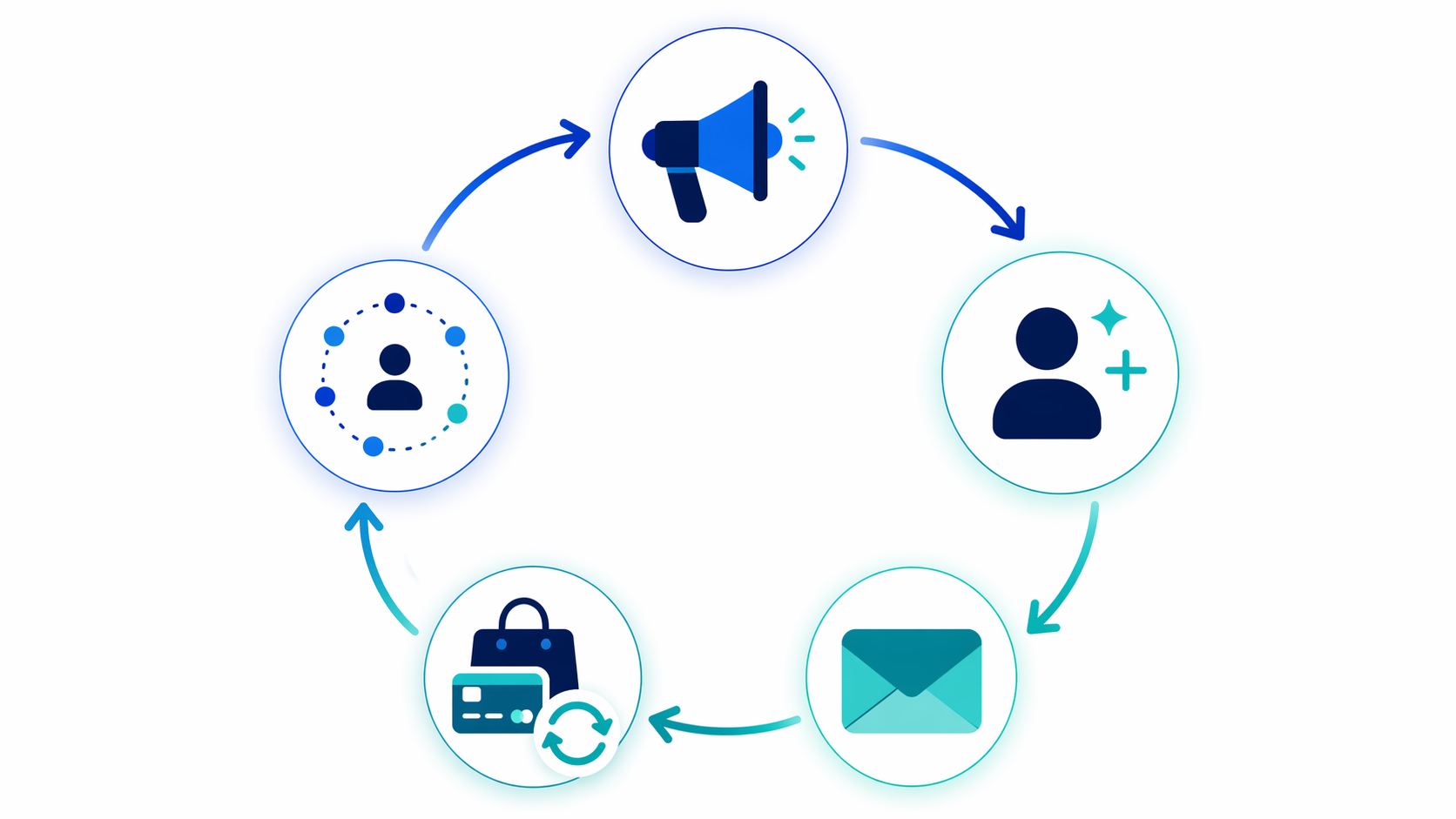
Meta ads bring new customers to the store, and email turns them into second and third-time buyers. Ads grow the email subscriber list, while email subscribers convert at far lower cost than cold ad traffic. Ads re-engage dormant email subscribers, and email reaches subscribers who never saw the ad. This mutually reinforcing structure, where each channel makes the other more powerful, is the core of what actually drives sustainable growth in global e-commerce in 2026.
This is also why choosing the right email marketing agency matters so much. You don't want an agency that's just good at email. You need a partner that can see performance advertising, email, and Shopify operations as parts of a single integrated strategy. When you run separate agencies for each channel, each optimizing in isolation, the overall efficiency of the system suffers.
If you're already operating a Shopify store in a global market, the first thing to do today is audit your Email CRM Shopify integration. Confirm that Klaviyo, or whichever platform you're using, is properly synced with Shopify, and that real-time purchase data is flowing through to power segmentation.
If you don't have email automation flows yet, the priority order is clear: Welcome series, then abandoned cart, then post-purchase sequence. These three alone, running correctly, can bring email to 15 to 20% of total revenue.
If you already have basic flows but they're underperforming, the problem is almost always segmentation and personalization. The revenue gap between sending the same email to your entire list versus sending segmented, behavior-based messages can reach 760%.
When working with an email CRM agency, the key is to look beyond "sending emails on your behalf." You need a partner who designs strategy from data, then continuously optimizes, reviewing which flows generated how much revenue each month, which customer segments have the highest LTV, and which offers are converting best. Real growth starts when you build a structure where those questions get answered together.
If you're not sure where to begin, Disrupt's Email Marketing service page is worth a look. As an official Klaviyo partner, Disrupt builds everything from automated flow architecture to segmentation and A/B testing in a way that's actually optimized for Korean brands operating in global e-commerce. Ads build today's revenue. Email builds tomorrow's brand. Without both, you're standing still.
Key Takeaways
- Email ROI reaches up to $72 per $1 spent, up to 36x higher than paid social
- Automated emails represent just 2% of sends but drive 30% of revenue, a set-it-and-let-it-run revenue engine
- Flow priority: Welcome → Abandoned Cart → Post-Purchase → Browse Abandonment → Win-back
- Email + advertising working together consistently outperforms either channel running alone
- Your email list is a brand asset, immune to algorithm changes, cookie deprecation, and platform regulation
- Shopify - Klaviyo integration is the technical foundation of any serious global email strategy
Frequently Asked Questions
Q1. What should a Korean brand do first when starting global email marketing?
Start by confirming the Shopify - Klaviyo data sync is properly configured. Purchase data and behavioral data need to flow in real time before segmentation and automated flows can function correctly. Once that's in place, build the welcome series and abandoned cart flow first.
Q2. Can email marketing replace paid advertising?
No. Email does not replace advertising: it completes it. Ads bring in new customers; email converts them into repeat buyers. The two channels are most powerful when they operate together, with each reinforcing the other's effectiveness.
Q3. How quickly do results appear after setting up email automation flows?
Welcome series and abandoned cart flows typically begin generating revenue within the first week of launch. Once all five core flows are active, usually around the 12-week mark, email commonly accounts for 20 to 30% of total Shopify revenue, which is the standard industry benchmark.
Q4. What should you look for when choosing an email marketing agency?
Look for a partner that can design email strategy as part of an integrated system with performance advertising and Shopify operations, not just an agency that manages sends in isolation. Official Klaviyo partnership, hands-on experience with Korean brands in global e-commerce, and a data-driven optimization process are all important criteria.
Q5. Email flows are already running, but results are disappointing. What's wrong?
In most cases, the issue is a lack of segmentation. The revenue gap between batch-and-blast emails and behavior-based, segmented messages can be as wide as 760%. Send frequency, subject line optimization, and mobile layout should also be audited alongside segmentation strategy.
Ads build today's revenue. Email builds tomorrow's brand. Without both, you're standing still.