
Work
Behind the Scenes: How Designer and Account Executive Collaborate at Disrupt
The creative process that brings brands to life
2026-04-16


When Strategy Meets Design
In global marketing, a brilliant idea alone is rarely enough. What transforms strategy into impact is the space where clear thinking and strong visuals meet - and at Disrupt, that space is built between our Account Executives (AEs) and the Designer.
Every ad creative, every product page, and every email creative we deliver starts with a collaboration between these two roles. While each has a distinct focus, the quality of the final output depends on how well they work together. In this article, we take you behind the scenes of that process - the workflow, the principles, and the real experiences shared by our Disruptors.
Who Does What: Understanding Each Role
Before diving into the process, it helps to understand what each role brings to the table.
Account Executives are the strategists. They own the brand relationship, define the direction for each deliverable, and translate complex partner goals into clear, actionable briefs. They're responsible for setting the "what" and the "why" - before the Designer ever opens a design tool.
The Designer is the creative executor. Taking that strategic direction and bringing it to life visually, crafting outputs that not only look strong but resonate with the right audience on the right platform - whether that's Amazon, Shopify, or email.
The key is that neither role works in isolation. AEs set the stage; the Designer makes it shine.
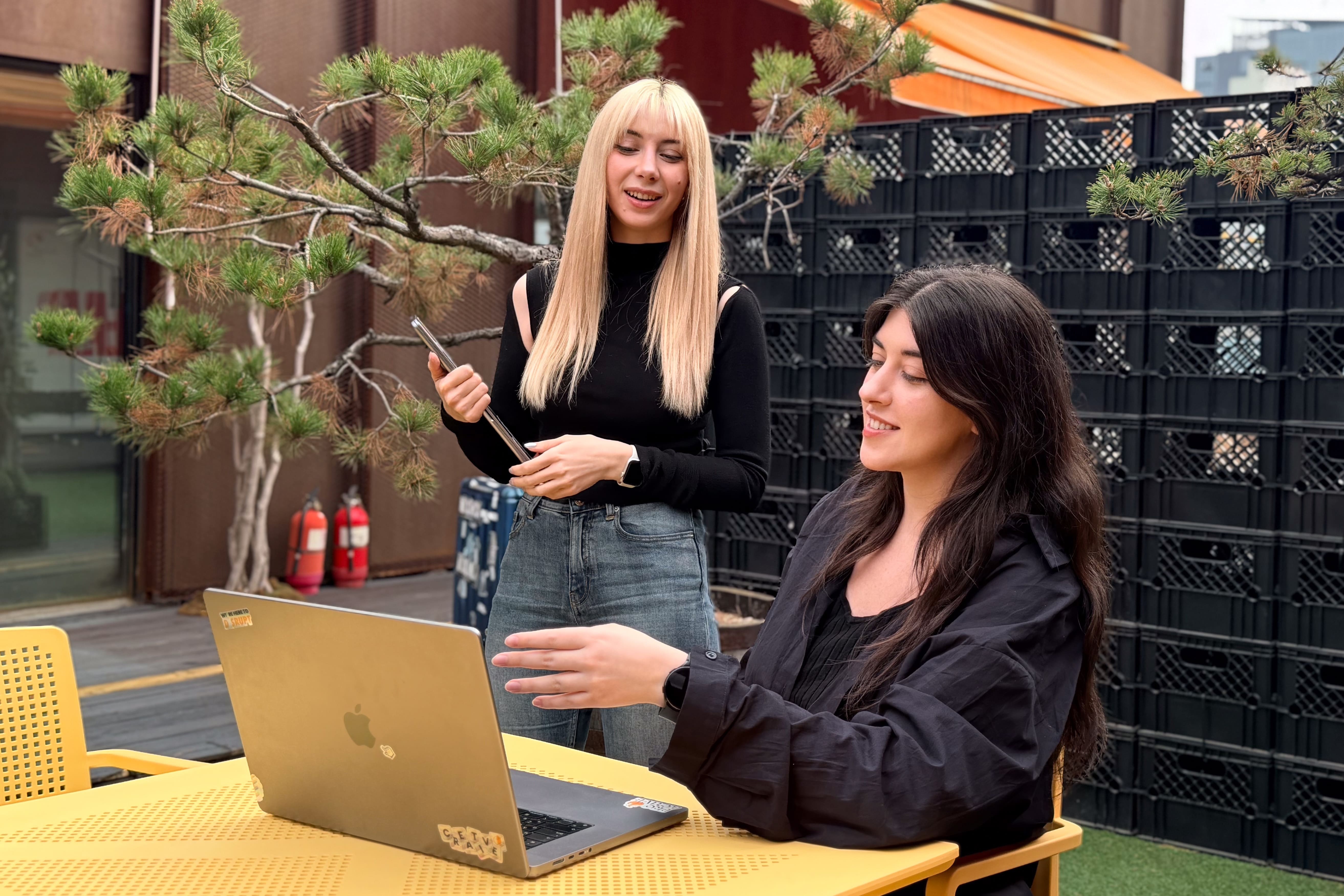
The Collaboration Workflow
While every project at Disrupt has its own rhythm, the collaboration between AEs and the Designer follows a consistent structure.
Step 1: Alignment on Goals and Direction
Every project starts with alignment. Before any visual work begins, the AE and Designer sync up on the project's objectives, target audience, and key selling points. This early conversation sets the tone for everything that follows.
"I usually start by aligning on the project goal, target audience, and key USPs with the designer before any execution begins."
Sally, AE
"We start with a kick-off meeting to align on timelines. Sometimes I set it up, sometimes the AE does. From there, the AE leads on strategy and builds the wireframe."
Linda, Designer
Step 2: Wireframing - The Blueprint for Design
After the initial alignment, the AE builds a wireframe: a structured document that outlines copy direction, visual hierarchy, and asset requirements. The wireframe isn't just a layout - it's the bridge between strategy and execution. But a good wireframe also knows where to stop. The goal is to guide, not restrict. It provides structure while leaving room for the Designer's creative perspective.
"I focus on clarity and intent, making sure the designer understands not just what to design, but why. I also try to be very specific about image direction and references so there's less ambiguity. At the same time, I leave room for the designer to bring in their creative perspective."
Sally, AE
"When creating wireframes I have two main focus points: clear alignment with the brand image and the correct copywriting, and making sure I'm creating a wireframe that I know the designer can actually execute. I like to make sure I'm fully familiar with the shopify theme's capabilities and limitations."
Nefeli, AE
Before the wireframe goes to the partner, the Designer reviews it to ensure every element is realistic to execute. This step matters because a wireframe that looks good on paper but ignores platform constraints or design feasibility creates friction down the line by slowing down timelines and forcing unnecessary revisions.
"Before it goes to the partner, I review it to make sure everything is realistic to design: font sizes, layout logic, and copy length. In ad design, less is always more."
Linda, Designer
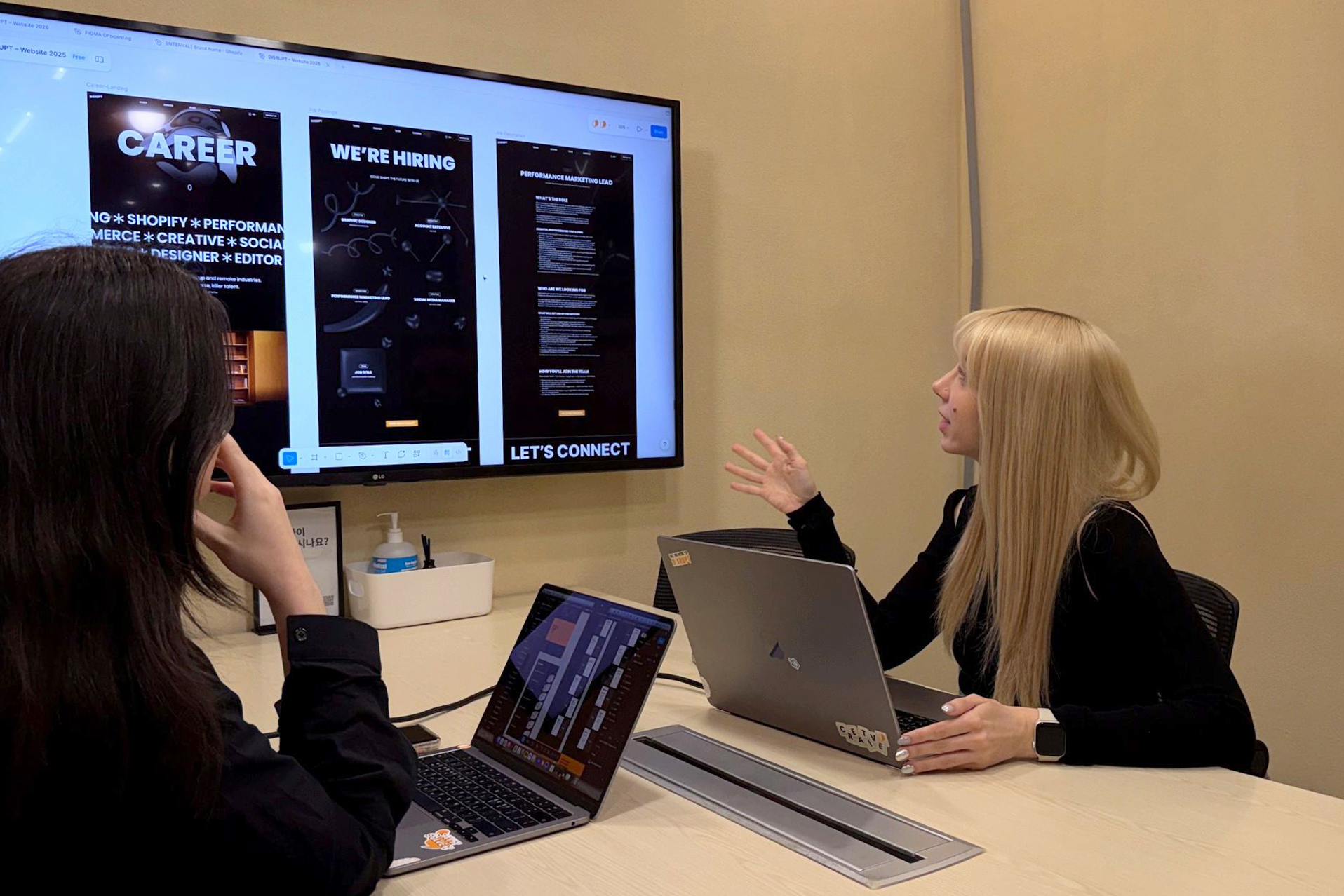
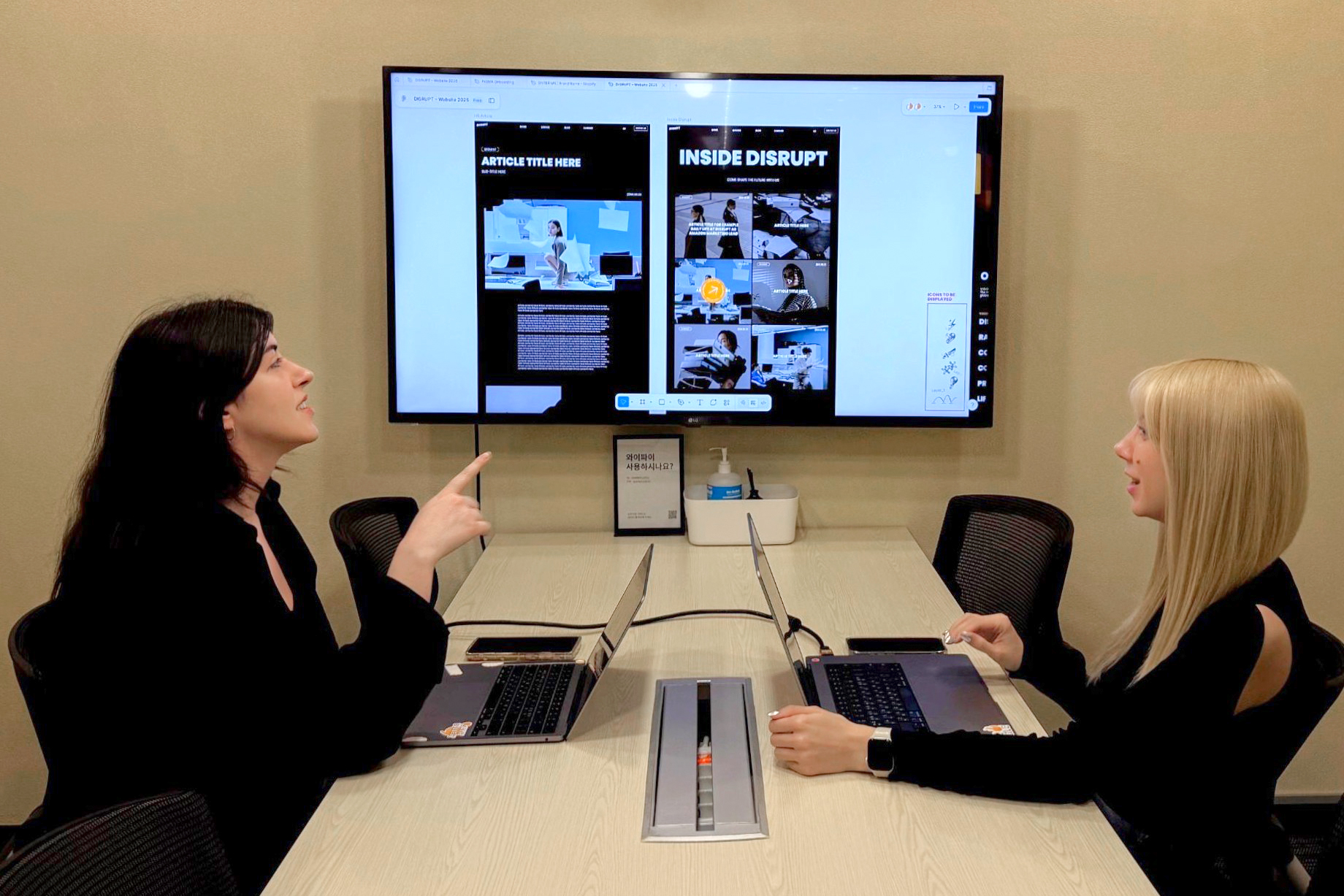
Step 3: Design Execution
Once the wireframe is partner-approved, the Designer moves into the creative phase. The focus shifts to making the brand stand out - through thoughtful hierarchy, brand-specific visual language, and platform-appropriate execution.
"The first thing I think about is hierarchy. Whatever information needs to be communicated with the highest priority should be the most visible thing on the page. Everything else builds around that."
Linda, Designer
Platform context always shapes the approach. A campaign on Amazon and one on Shopify call for very different creative decisions. For brands with defined guidelines, the Designer studies those first. For brands with less direction, moodboarding and custom visual development take center stage.
Step 4: Feedback and Iteration
Partner feedback flows back through the AE, who consolidates and contextualizes it before passing it to the Designer. This single communication channel is intentional. It keeps the Designer fully focused on the creative, without getting pulled into back-and-forth partner conversations.
"I usually consolidate and structure partner feedback before sharing it, so the designer receives clear and actionable direction. Instead of passing feedback as-is, I filter what's essential and align it with the overall strategy."
Sally, AE
"What really helps is when an AE can add context to the feedback, especially if it connects to something the partner said earlier in the process. Those nuances matter a lot in design."
Linda, Designer
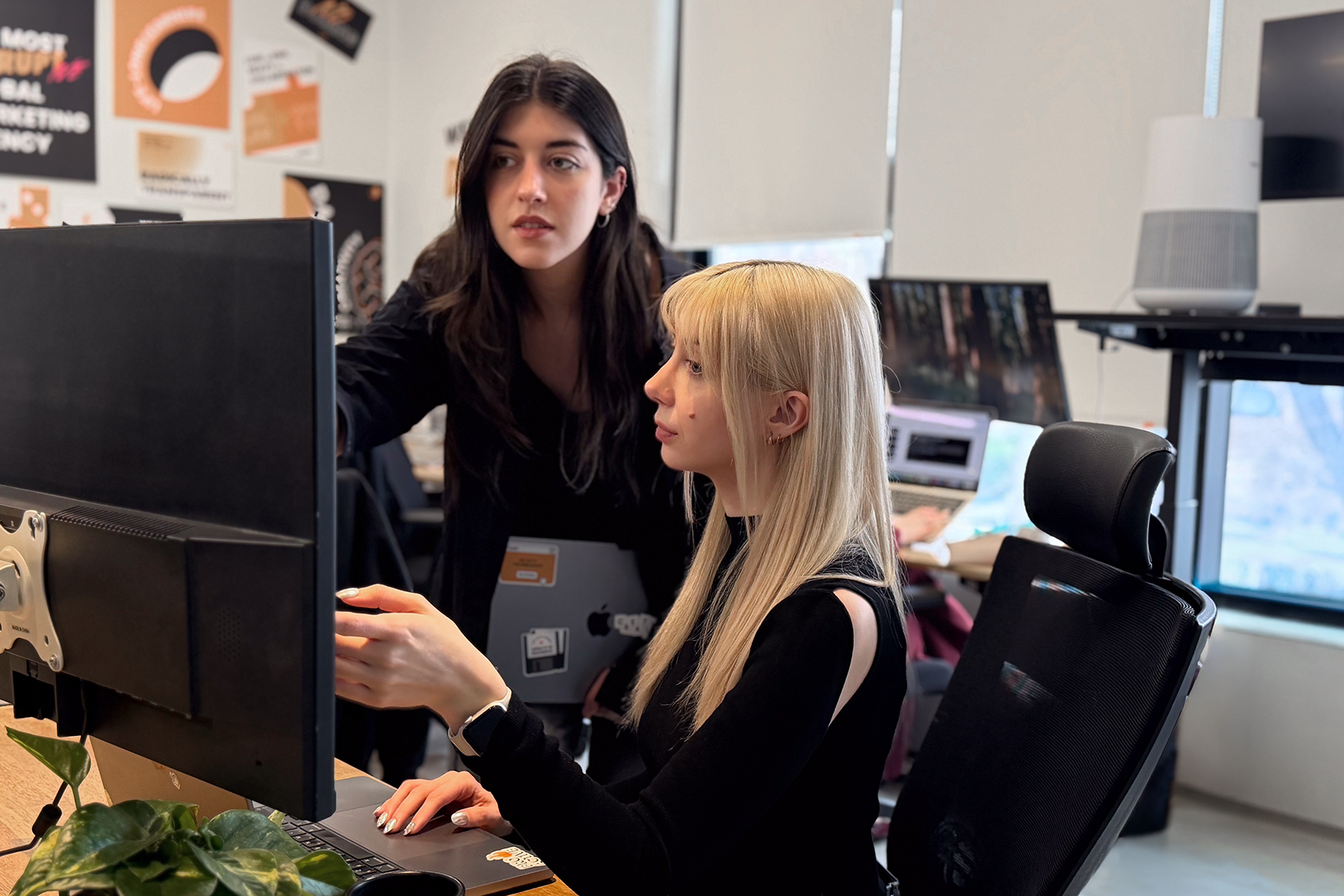
What Makes the Collaboration Work
Beyond the steps, a few key principles define how AEs and the Designer at Disrupt work together effectively.
Clear, Structured Input
A well-built wireframe is worth more than a dozen follow-up conversations. When AEs provide organized direction, including copy, image references, and visual hierarchy, the Designer can move faster and with more confidence.
"A lot of marketers tend to ignore realistic deliverables and make wireframes that in fact are not possible to create, which only creates stress and tension. The best approach is to lessen the load of the next person working on a task."
Nefeli, AE
Understanding Each Other's World
The best collaborations happen when each side has a genuine understanding of the other's constraints and capabilities. AEs who understand platform limitations build smarter wireframes. The Designer who understands the partner's strategic needs makes more intentional creative decisions.
"Good organization on both sides makes everything run smoother. That means both the AE and Designer understanding the platform we're working on, and the AE having a clear picture of what assets the partner actually has available before the wireframe is built. That last point saves an enormous amount of time."
Linda, Designer
Mutual Respect for Each Role
Both AEs and the Designer bring distinct expertise to a project. When that expertise is respected - rather than overridden - the final output reflects the best of both.
"The most important factor is mutual understanding and respect for each other's role. AEs should provide clear strategic direction, while the designer brings that vision to life creatively. Open communication and transparency are also key, especially when giving feedback or raising concerns."
Sally, AE
Real Stories: When It Comes Together
The proof is in the projects.
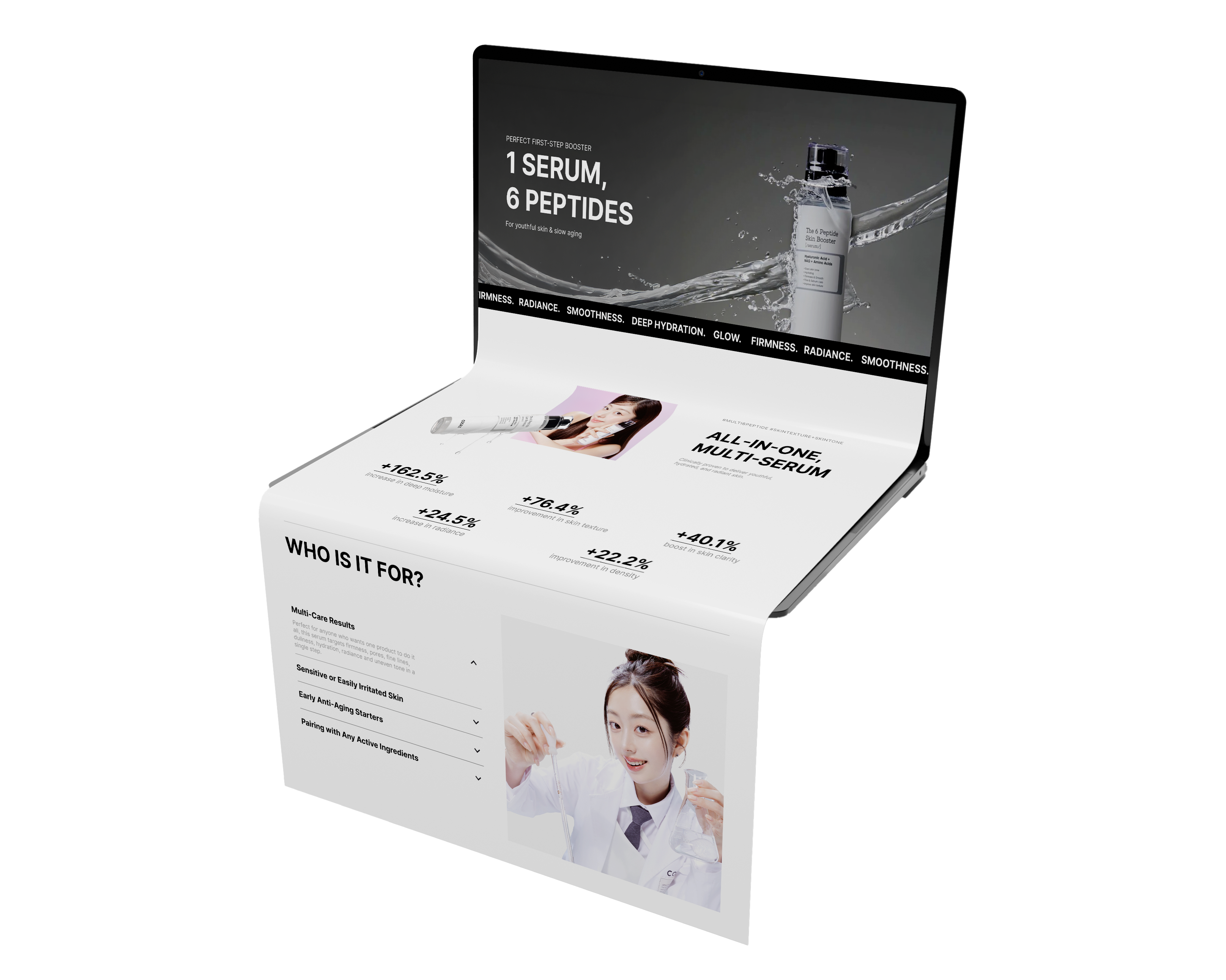
The COSRX Shopify project is one of the clearest examples of what structured AE-Designer collaboration can deliver. COSRX is a globally recognized K-beauty brand with a presence across multiple retail platforms. When Disrupt took on the Shopify campaign, the AE and Designer worked closely from the start to align on creative direction, ensuring every asset was built to perform on the right platform for the right audience. The AE defined the messaging hierarchy and copy direction, while the Designer executed visuals optimized for conversion.
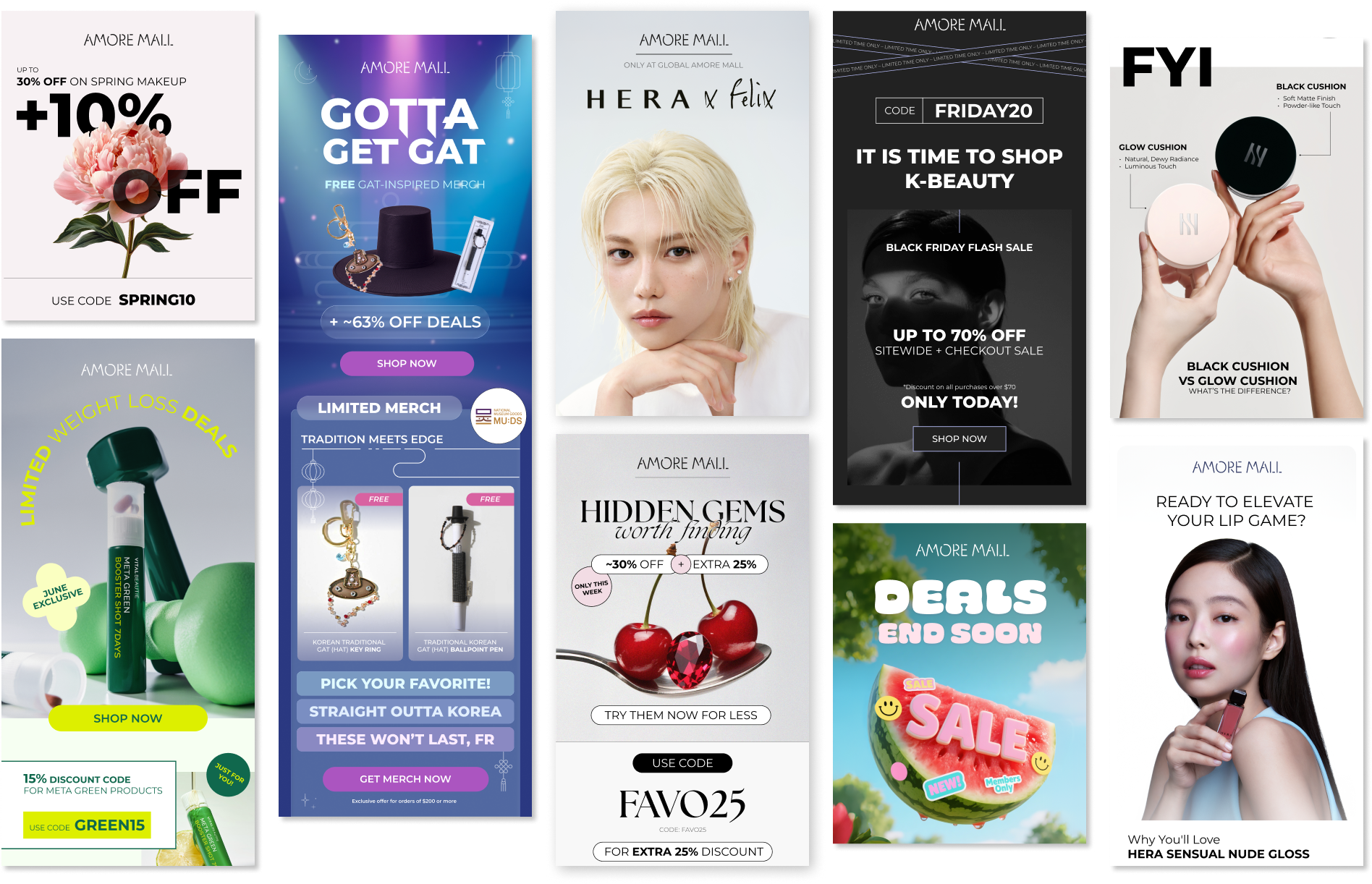
For the Amore Mall Email project, the AE-Designer collaboration took on a different shape, but the same foundation of alignment and structured input made all the difference. Global Amore Mall, a K-beauty platform by Amorepacific, needed a full email marketing system built from the ground up. The AE led the customer journey mapping and built wireframes for each automated flow, and the Designer brought those wireframes to life with visuals tailored to each stage of the customer journey. A consistent monthly rhythm followed: AE directing strategy and copy, Designer executing the creative, and the results spoke for themselves.
"I typically begin by aligning with the designer on the final deliverables - what the end product should look like and what success means for the project. Establishing a clear and realistic timeline is also critical, as it ensures both sides are aligned on milestones and expectations."
Peter, AE
"It comes down to quick internal alignment, openness to feedback in both directions, and genuine collaboration where both sides are working toward the same goal."
Linda, Designer
Collaboration as a Core Value
At Disrupt, collaboration isn't just how we work. It's one of our defining values. It's the belief that the best outcomes come not from Disruptors working in isolation, but from those who trust each other's expertise, communicate with clarity, and move toward shared goals together.
The AE-Designer relationship is one of the most vivid expressions of that value in practice. Every wireframe handed over with care, every piece of feedback delivered with context, every creative decision made in alignment - these are acts of collaboration. And they add up to something neither role could achieve alone.
What makes this collaboration sustainable isn't a formal process, but it's a culture. At Disrupt, we actively foster this by encouraging Disruptors to invest in understanding each other's world, to communicate openly even when something isn't working, and to approach every project as a shared responsibility rather than a divided task list.
"Clear and consistent communication is the most important factor. When both sides understand the 'why,' collaboration becomes much more efficient. Additionally, mutual respect for each other's expertise - strategy from the AE and creative execution from the designer - is key to producing strong outcomes."
Peter, AE
For Disruptors who thrive here, Collaboration isn't an extra effort. It's just how things get done. If this sounds like the team you want to be part of, we want you here. Check out our open positions and apply today. Your next chapter as a Disruptor starts now.


