
The surge in AI-generated visuals represents one of the most transformative creative shifts as we enter 2026. Brands now possess the capability to produce high-fidelity model shots, product renders, and immersive lifestyle scenes in mere minutes. This allows teams across Amazon, Shopify, and social media platforms to rapidly iterate on concepts and scale content without the logistical constraints of traditional production.
However, without the oversight of precise prompting and expert art direction, AI imagery can often appear glaringly artificial. Details such as warped product dimensions, uncanny skin textures, or distorted text are nuances that modern customers notice immediately, potentially eroding brand trust. Because design is inherently about influencing psychological decision-making, trust remains the ultimate driver of conversion on product pages, just as clarity dictates ad clicks and coherence ensures a frictionless purchase journey.
This is precisely why leading brands in 2026 partner with creative teams who understand how to engineer AI into conversion-ready assets. At DISRUPT, we view AI not as a shortcut, but as a guided creative engine shaped by professional aesthetic standards, brand consistency, and deep performance insights. While AI provides unprecedented scale and speed, human expertise ensures the qualitative integrity that resonates with customers. This balance is further elevated through backend enhancements - such as those detailed on our AI Optimization service page - where refined alt-text, structured data, and channel-specific metadata transform creative outputs into high-performing digital assets.
While AI tools are advancing at a breakneck pace, producing sharper details and more realistic lighting, this technological leap actually increases the necessity for human creative direction. As AI generates increasingly complex visuals, the perceptual gap between raw, unedited outputs and strategic, conversion-focused assets becomes more apparent. Hybrid teams leverage AI for its computational strengths while manually refining the areas where the technology still falters.
In this workflow, AI serves to explore a vast array of possibilities at high speed, while humans select the most strategically viable directions, correct anatomical or technical errors, and calibrate the emotional resonance to align with the brand’s identity. On Amazon, where accuracy is paramount to protecting consumer trust, DISRUPT’s designers meticulously correct proportion issues or mislabeled packaging. On Shopify, we ensure that AI visuals integrate seamlessly into the site layout to enhance readability and user flow. Meanwhile, for social ads, performance strategists mold AI concepts into scroll-stopping creatives designed for maximum engagement. Hybrid teams ultimately win because they synthesize the efficiency of AI with a profound human understanding of the customer’s path to purchase.
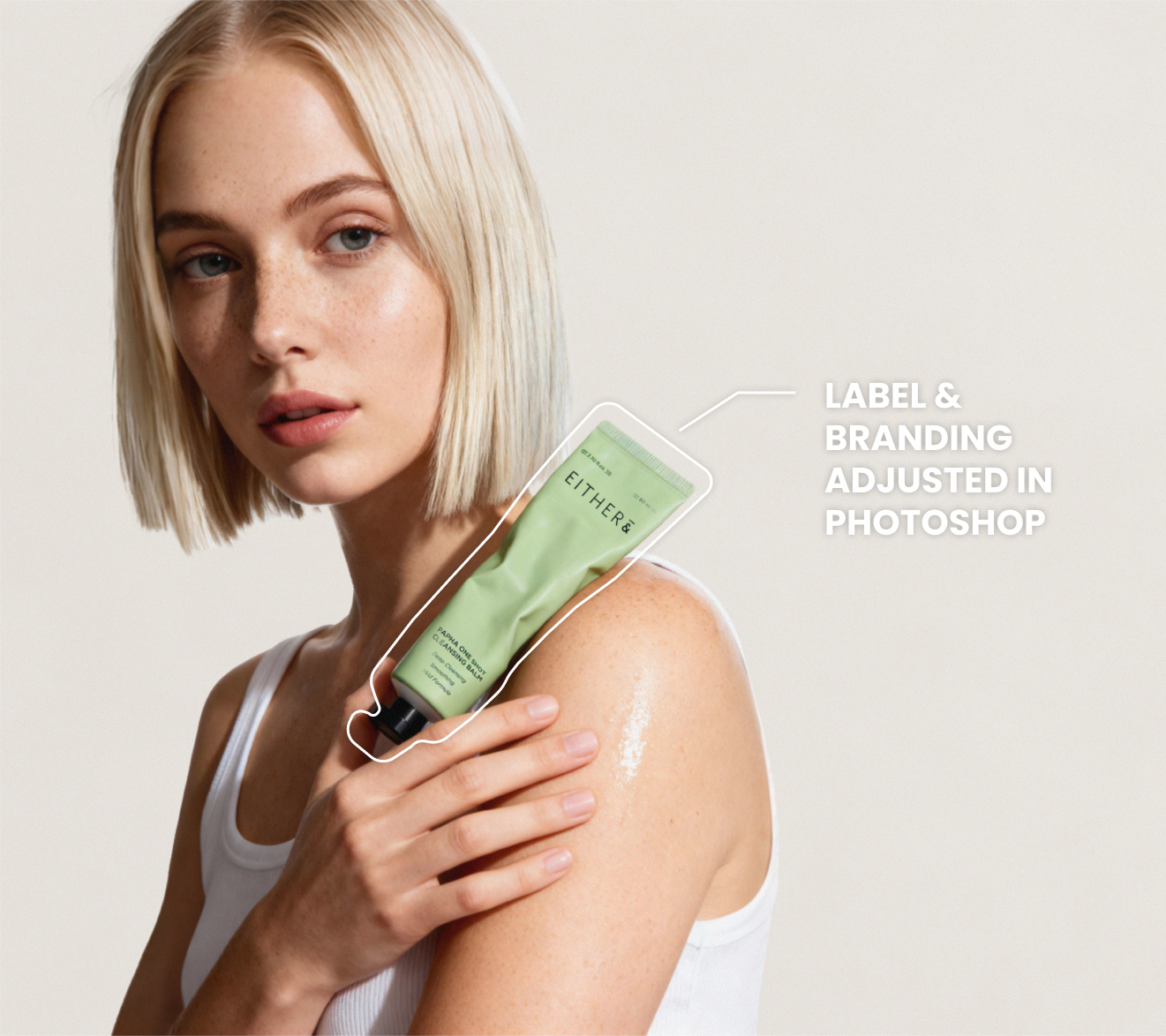
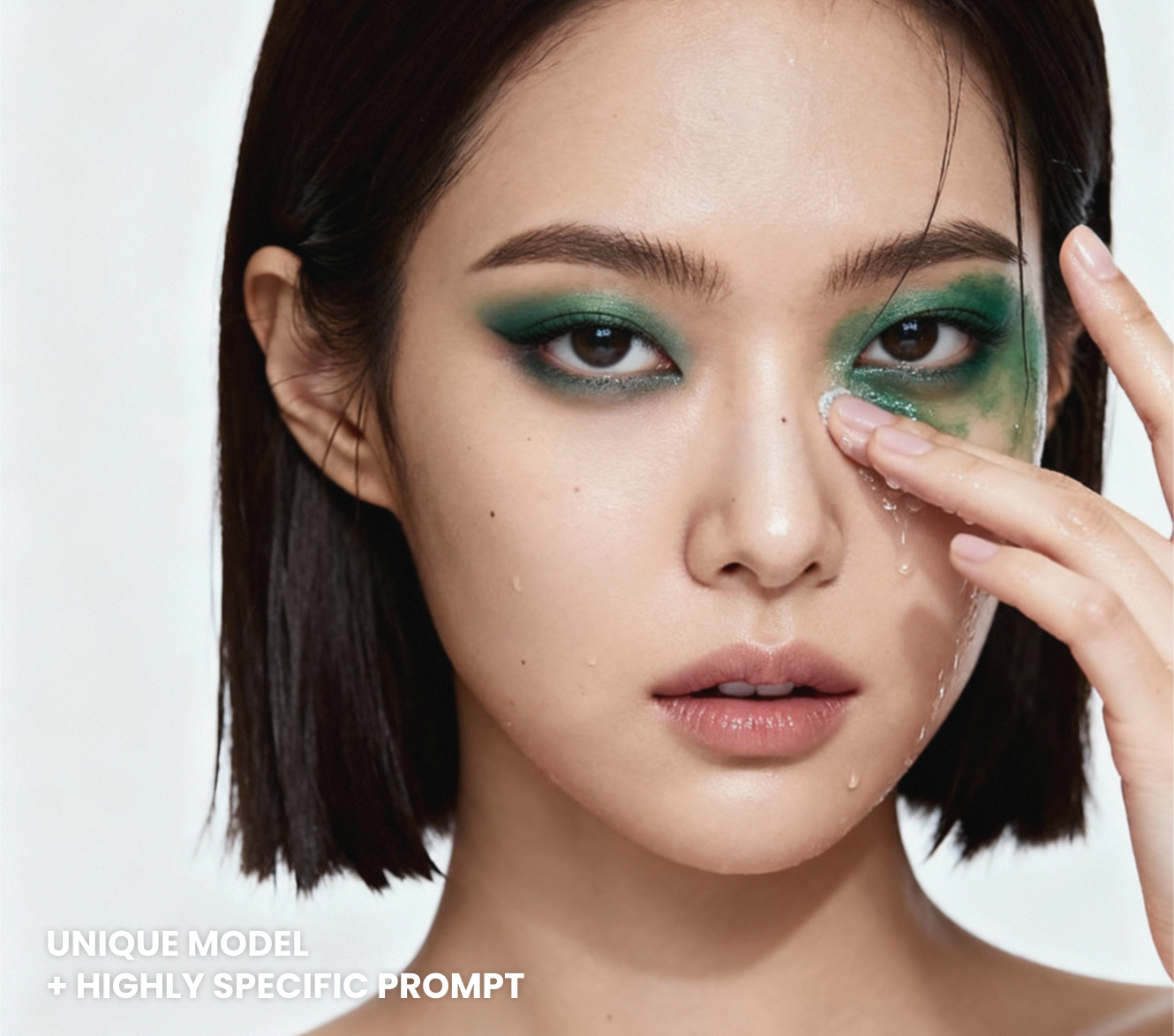
Although AI is frequently categorized as a cost-saving measure, its true value proposition lies in its ability to produce more persuasive and hyper-tailored visuals than traditional production methods could ever allow. Partnering with DISRUPT grants brands several distinct strategic advantages in practice.
1. Diverse Concepts with Reduced Lead Time
Designers can now explore multiple creative directions simultaneously, allowing for rapid conceptualization without the massive financial and time commitments required for full-scale photoshoots.
2. Elevated Storytelling Capabilities
AI enables the creation of complex visual narratives. From floating product textures and magnified skincare details to dreamlike, expressive portraits, that would be technically difficult or prohibitively expensive to capture otherwise.
3. Unified Brand Consistency
Brands can maintain a highly synchronized visual system across Amazon, Shopify, and social ads, ensuring a coherent brand voice regardless of the platform.
4. Rapid Performance Iteration and Discoverability
By utilizing optimized assets supported by robust metadata and schema, brands can significantly improve their discoverability and engage in faster testing cycles. As demonstrated on DISRUPT’s AI Optimization page, when ad performance dips, our hybrid workflow allows teams to produce and deploy alternatives instantly, ensuring sustained momentum.
The gap between a basic prompt and a conversion-ready asset represents the difference between mere experimentation and tangible business growth. Optimized AI creatives, supported by proper SEO schema and alt-text, fundamentally strengthen final page performance.

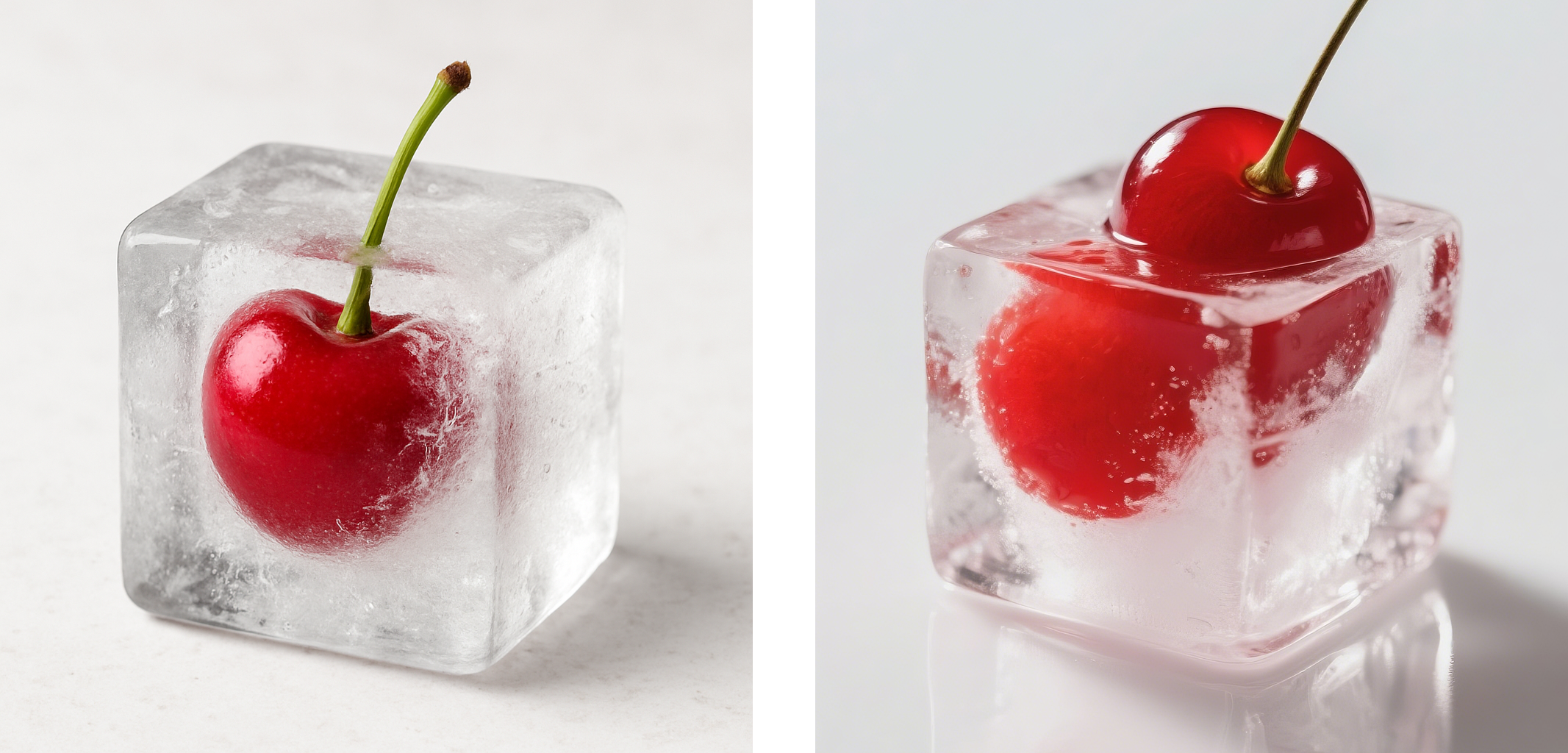

DISRUPT’s AI creative workflow is specifically engineered for brands looking to scale within global markets. It represents a sophisticated blend of AI generation, design mastery, brand strategy, and channel-specific performance expertise. Every project begins with a strategic inquiry: identifying exactly which visual elements will drive the desired consumer action.
Within our ecosystem, AI explores countless directions, after which designers refine the most promising options, retouchers fix technical details, and art directors establish the correct emotional tone. Finally, performance teams evaluate which visuals will perform best across specific channels. This comprehensive workflow ensures that every asset is not only aesthetically superior but also strategically aligned with the customer’s decision-making process.
In 2026, visuals alone are insufficient for sustainable growth; success requires the integration of strong aesthetics with strategic backend enhancements. Brands that adopt these hybrid creative workflows will inevitably stand out—they build faster, test more frequently, and communicate more effectively. The future of the creative industry is not about AI replacing humans; it is about AI and human creativity collaborating to produce clearer, stronger, and higher-converting visuals. This is the definitive advantage DISRUPT brings to our partners in 2026, ensuring that every asset is optimized for both beauty and performance.