
There is a fundamental question that most Shopify store owners have yet to ask, though they certainly should: Who is your website actually designed for?
The immediate answer is your customers. Real people who scroll, read, feel, and ultimately make a purchase. However, in 2026, a second audience is meticulously reading every page you publish, every heading you write, and every product description you craft. This audience does not shop in the traditional sense; instead, it decides whether your store is worthy of being recommended to those who do.
That audience is Artificial Intelligence.
Platforms like ChatGPT, Gemini, Perplexity, and Copilot are no longer just search engines; they have evolved into recommendation engines. The brands currently winning the market have recognized a crucial shift: you can no longer choose between designing for humans or designing for machines. To succeed, you must do both from the ground up. This is the essence of Generative Engine Optimization (GEO) for Shopify, and it begins not with your content or keywords, but with your fundamental structure.

Shopify GEO, or Generative Engine Optimization, is the practice of building and structuring your store so that AI recommendation systems can seamlessly parse, understand, and confidently recommend your brand. It is important to distinguish GEO from traditional SEO. While SEO focuses on search engine rankings and click-through rates by asking how to rank higher, GEO prioritizes AI comprehension and recommendation eligibility by asking how to become the definitive answer an AI provides.
The foundation for both remains rooted in structure. An AI-readable ecommerce website requires a logical information hierarchy and machine-parseable content. Furthermore, comprehensive schema markup must inform AI systems exactly what your brand sells, whom it serves, and why it should be trusted. When the structure is executed correctly, every other element - including content, design, and performance - compounds to drive results.
For a long time, the digital commerce strategy was straightforward: create a visually appealing Shopify store, run Meta ads, and layer in basic SEO. As long as the ROAS remained healthy, the business thrived. However, the rise of AI search has fundamentally altered how decisions are made before a user even clicks a link. A growing share of potential customers now asks AI which skincare brands to trust, which supplements are effective, or which DTC brands offer reliable international shipping.
An AI’s response is not influenced by the aesthetic beauty of a hero image; it is entirely dependent on whether the AI can comprehend the store’s data. This is the critical gap where many Shopify brands currently struggle. Their stores may look stunning to a human eye, but to an AI crawler, the page often appears as an unreadable wall of noise.
Consider a customer asking an AI for the best Korean sunscreen for sensitive skin under $40. If a Shopify store’s information architecture is unclear - characterized by vague categories, thin product descriptions, or missing schema - that brand will not even make the shortlist. This results in a lost impression, click, and sale, often without any data in the analytics to show what was missed. This oversight usually stems from neglecting information architecture, the invisible skeleton of a website that, in 2026, is either a brand’s greatest advocate or its silent detractor.

While design is often viewed merely as a visual layer consisting of colors and typography, in 2026, design decisions also serve as vital GEO signals that determine a page's legibility to AI. Human-centered design remains paramount, as users still prioritize speed, performance, visual hierarchy, and frictionless checkout. AI cannot compensate for poor user experience, but modern UX must now simultaneously support machine parsing.
Designing for a dual audience means creating a clear visual hierarchy that guides the human eye naturally through calm, content-first layouts and purposeful whitespace. Simultaneously, this must be supported by a consistent heading hierarchy from H1 to H3 and logical section groupings that an AI can easily follow. Clean code architecture is essential to ensure no text is buried, allowing AI to efficiently crawl the store, extract and cite content, and deeply understand the brand. When design prioritizes decorative drama over structural clarity, such as breaking headlines across disparate elements or embedding text within images, both audiences suffer. Humans feel a subtle confusion, while AI may misread the page or move on to a competitor with a clearer structure.
Beneath the visual design lies the semantic layer, arguably the most important factor for GEO performance. This involves structured data, schema markup, and clean HTML semantics that translate human-readable content into meanings that machines can reliably interpret. When schema markup is applied correctly across product, category, and brand pages, it tells AI systems exactly what a product is, its intended audience, its cost, and its reputation among customers. Without this layer, the AI is forced to guess, leading to omissions and missed recommendations.
For Korean brands striving to reach a global audience, mastering this semantic layer is the entry fee for international AI visibility. A proper AI optimization process should begin with a comprehensive visibility audit before any copy is written or design is touched, ensuring a clear understanding of how AI currently perceives the brand.
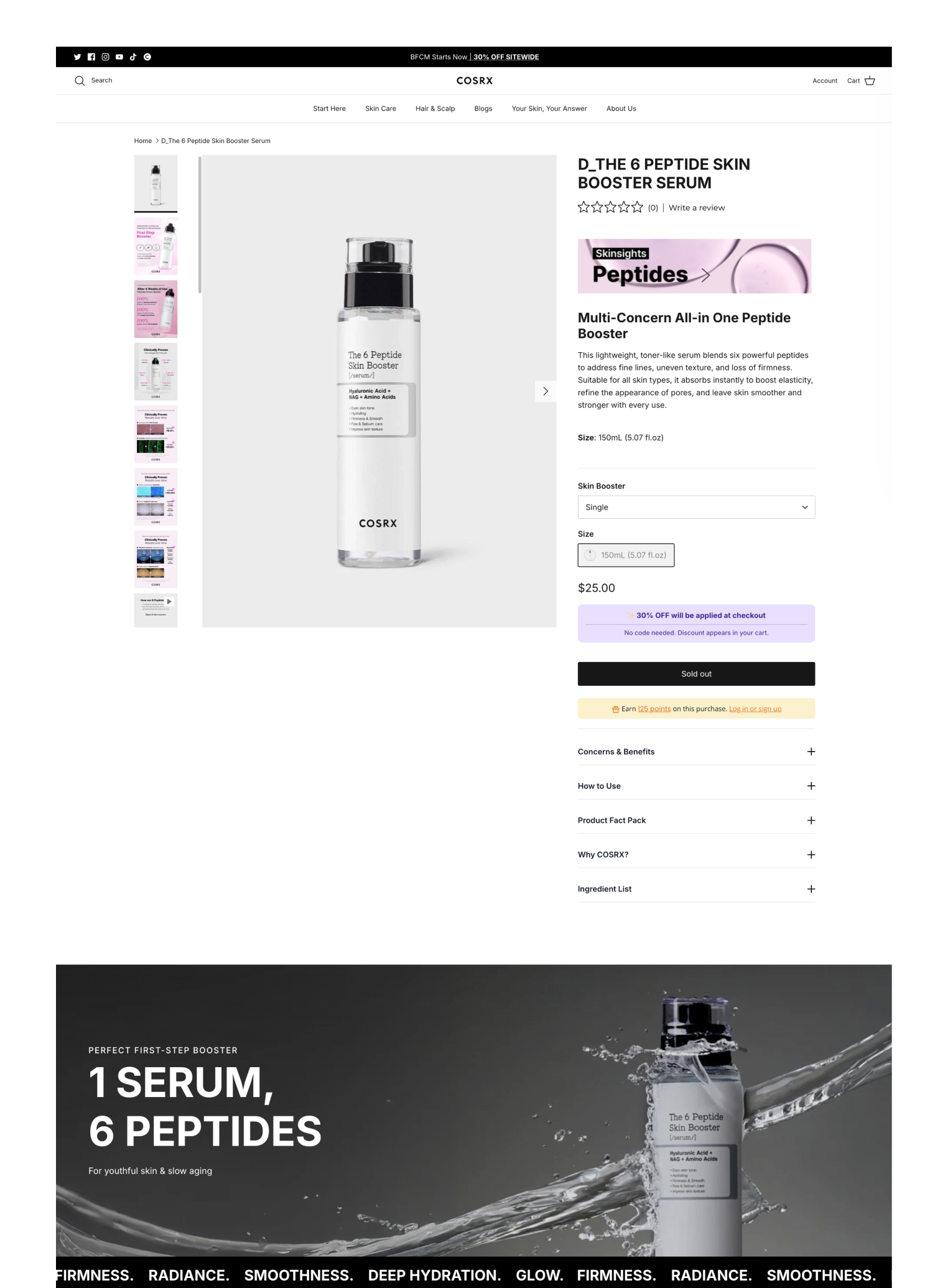
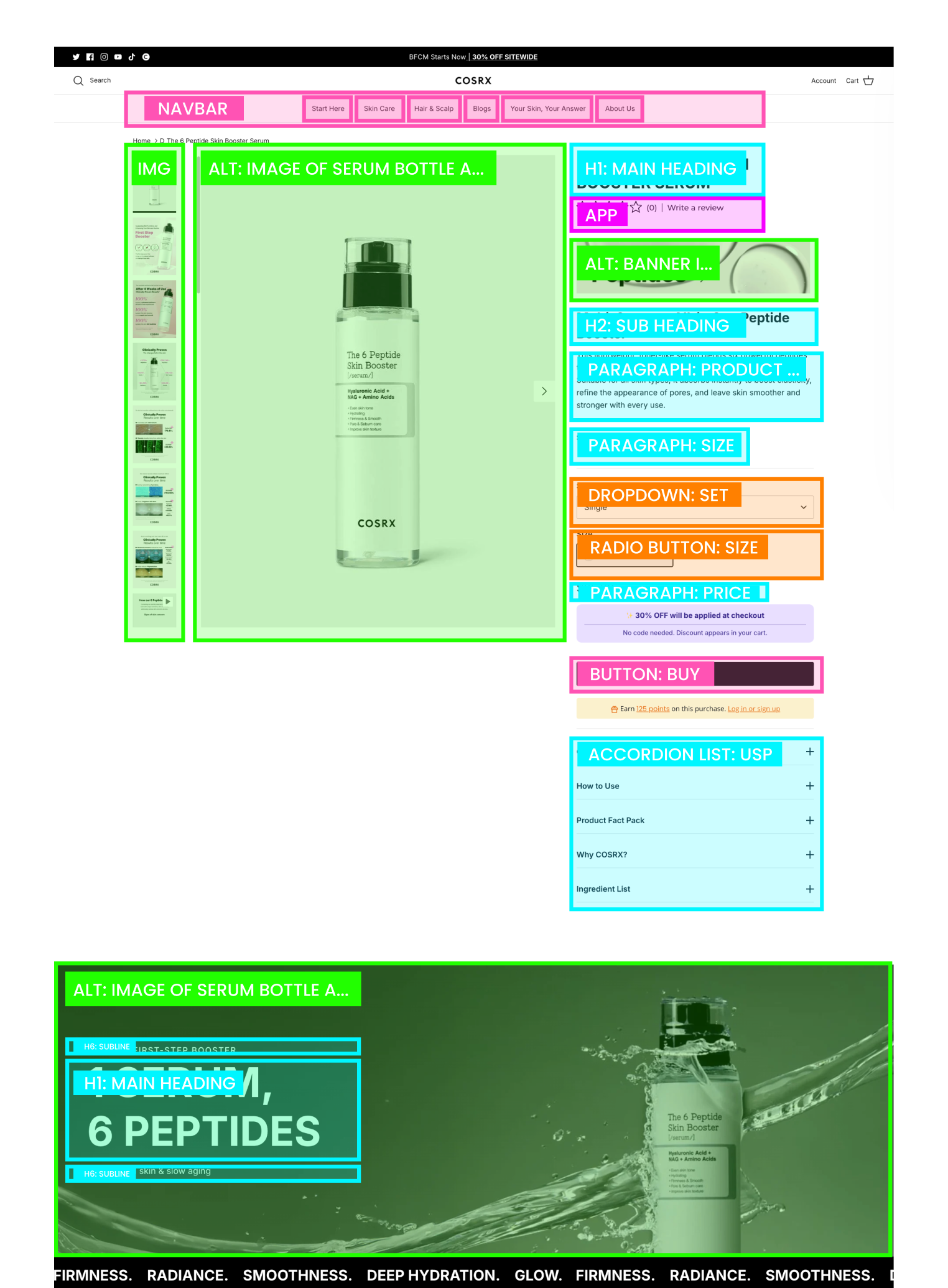
The Shopify stores that will dominate AI search in 2026 are those planned with intentionality from the beginning. This requires a content-first information architecture where category pages serve as editorial documents and product pages act as structured answers to the questions customers and AI systems are actively asking.
Content must perform a double duty: it must be written to engage the human reader while being structured for the AI that cites it. This dual-purpose content creation, designed to convert people and be understood by machines simultaneously, is a specialized discipline. Whether building from scratch or optimizing an existing store, the process must start with structure rather than surface-level content.
AI-driven discovery is no longer a future concept; it is a present reality. Brands investing in GEO-ready design today are building a compounding advantage through increased AI citations, organic recommendations, and established trust. Conversely, brands that wait are allowing a gap to widen that may soon become insurmountable. AI systems continuously learn which brands provide the best answers and which stores are structurally coherent, meaning the advantage of optimization only grows over time.
The necessity of GEO optimization for a Shopify store is clear. The only remaining question is whether a brand will act now while the competitive advantage is significant, or later when the field has already caught up. Success in this new landscape requires design, information architecture, technical implementation, and content strategy to work in unison from the first day of development. In a world where AI is increasingly the first touchpoint between a customer and a brand, this integrated approach is no longer optional; it is the entire game.